
FM Group Newsletter
Winter 2026
Introduction
FROM THE DIRECTORS
Welcome to the Winter edition of our newsletter.
The endless summer that gave us a mild autumn and a nice start to winter has well and truly disappeared. With multiple destructive weather events over the last month or so impacting many people across the country. Our thoughts are with those affected.
The positive side is that it is great weather for planting, with all regions in full swing getting seedlings in the ground.
Winter harvesting carries on, with an increase in July AWG prices across the country. This is a positive trend that will hopefully continue into spring. China seems cautiously optimistic around sales and demand in the current economic climate.
The steady decrease in fuel costs over the last two months is helping not just the harvesting and transport side of our industry, but everyone across the board. There are hopes for further stability in the Middle East; however, the situation unfortunately still seems very volatile.
Carbon prices have been sitting relatively stable around the low to mid fifty-dollar mark. Investors are relatively quiet in this space, with it being an election year. There is a bit of uncertainty as to where things will go, depending on what sales pitches are put out before the election and who gets in afterward.
Overall, things slowly seem to be becoming more positive. The days are getting longer, and the All Blacks are winning, which is a good indication of the state of the nation.
John Rasmussen
Director
Log Market Update
July delivered a modest lift in export log markets, helped by lower oil prices, reduced shipping rates, and a weaker New Zealand dollar. Overall sales prices remain mostly flat, with some small CFR price reductions in selected markets.
July is usually a difficult month due to winter weather, monsoon impacts, and softer demand. However, current AWG prices are holding better than expected in some areas.
China
China demand remains steady overall, although some ports are seeing seasonal slowdowns.
• Sales prices are broadly flat, with small drops in some ports.
• Freight has eased by around US$6–7 and may reduce further in August and September.
• Demand is mixed, with some seasonal port slowdowns, but A grade, longer logs, and pruned logs are still showing interest.
Korea
Korea remains firm but limited, with demand mainly focused on A grade logs.
• Prices remain firm and generally follow the China market.
• Demand is steady for A grade, with less interest in pruned and K grade logs.
• Shipping is often combined with China parcels, particularly where deck cargo works well.
• Total Korea volumes remain around 2–3 million m³, well below the peaks of the early 2000s.
India
India is attracting more interest from New Zealand exporters and end users, with prices increasingly matching China market levels.
• A New Zealand free trade agreement could lift exporter returns by around NZ$5-7 or more.
• Demand is strong, although some ports continue to face congestion.
• End users are showing greater interest in quality and closer links with New Zealand forest owners.
• Shipping to India remains expensive, around US$20–25 above China freight rates.
Six to seven vessels are expected to leave New Zealand for India in Q3, offering a possible alternative market to China.
Containerised Volumes
Containerised log volumes are lifting out of Lyttelton, with demand into Vietnam and parts of China. This may change in spring if containers are needed for other commodities.
Domestic Log Sales
Demand for lumber grades remains strong, but log supply is constrained across many regions. Salvage logging has reduced fresh log availability, and Canterbury mills are seeing downtime due to limited volume. Conditions should improve after winter, though supply pressure is likely to continue.
ETS - Carbon Price Update
The Emissions Trading Scheme (ETS) is a market-based policy tool designed to reduce greenhouse gas emissions by putting a price on pollution. Participants are required to buy carbon credits (NZUs) to offset their emissions. Each NZU equates to 1 tonne of carbon dioxide.
NZU prices have continued to recover over the last three months with the NZU market improving from the lower levels seen early in 2026. The market has traded up to a short-term high breaking the $55/NZU level, before pulling back to a more recent $53.00 $55.00/NZU trading range.
While the trend has overall been positive, there has still been volatility within price ranges. The market appears better supported after May surrenders, and the stockpile is lower than it was earlier in the year. However, the market is still not trading close to the auction floor, and auction clearance is unlikely while the secondary market remains materially below $71/NZU.
The next price direction is likely to be driven by; the impact of Final Emission Returns on the "stockpile", the Government’s final ETS settings decisions later in the year, and whether the Climate Change Commission signals more fundamental changes to the ETS design.
During the quarter the market has gained better visibility on the NZU stockpile. Total private NZU holdings reduced after the May surrender deadline, reflecting the expected large surrender of units by emitters. However, the final remaining stockpile position is less clear. Emitter surrenders have
now been accounted for, but the final net forestry position will not be clear until all Final Emission Return processing is complete. Policy settings remain an important driver of market confidence. The Climate Change Commission released its 2027-2031 ETS unit limit and price control advice in April. The Commission recommended keeping auction volumes and price controls largely unchanged in the short term to support market stability, while cautioning that a unit shortfall could emerge later this decade if the surplus is depleted and auction settings are not adjusted.
The Government opened consultation on proposed ETS – this closed on the 12 th July. The Government’s preferred option is to keep settings broadly stable, with 13.0 million NZUs of auction volume across 2027-2031, compared with the Commission recommended 14.7 million units and a lower-volume option of 7.7 million units. Price control settings are proposed to remain largely unchanged, with inflation adjustments. On balance, the market feels more composed than earlier in the year but still not settled. The price recovery has been supported by lower estimated stockpiles, stronger buyer interest and tighter expectations for future supply. However, sustained upside probably requires greater confidence that policy settings will remain stable.
If you are considering selling NZUs, please contact Forest Management and we can talk you through the current market and sale options.
NES-CF Changes (as at June 2026)
On the 4 th June 2026, updated National Environmental Standards for Commercial Forestry (NES-CF) regulations were released.
While a lot of the changes were minor tweaks to wording and definitions, there were 5 large changes which will affect forestry operations going forward.
1. Afforestation
• Under the new regulations, a Council can no longer have more stringent rules about where new plantation forests can be planted.
• A management plan for afforestation is still needed, but there is much less information required in it e.g. we no longer need to specify how the forest will be harvested.
2. Replanting
• There is no longer the need to do a management plan for replanting operations, but we still need to do a wilding risk assessment.
3. Harvesting
• A new assessment has been introduced for managing slash risk. The old regulations specifying the volume and length of slash that could be left in cutover have been removed.
• Now all harvests that are on the NESESC (erosion susceptibility classification) orange land need to have a Slash Mobilisation Risk Assessment (SMRA) done. If it is found that:
a. The soil type is of severe, very severe or extreme risk of erosion, and
b. The slope is over 25˚, and
c. When all 0.25ha areas over 25˚are added up and come to more than 2ha in total area, then a controlled resource consent is required to carry out the harvest.
4. Wilding Risk Calculator
• A new Wilding Risk Calculator came into effect on the 25 th June 2026.This requires more detailed mapping to get the information to put into a standardised spreadsheet. At the time of writing, there are still some teething issues with the calculator, which MPI are sorting out.
5. Woody Debris definition
• The term ‘woody debris’ has been removed from the regulations, so we no longer have to take into consideration other forms of wood in any debris (e.g. fence posts, non-production forest tree species, etc).
It should be noted that there will be more changes to the NES-CF in the near future, with the changes to the RMA and the replacement bills that will be introduced before the election. These new bills will require more tweaks to the NES-CF to make sure they are in alignment with the requirements of the new legislation.
Watch this space!
International Panel and Lumber: A Long-standing Partnership
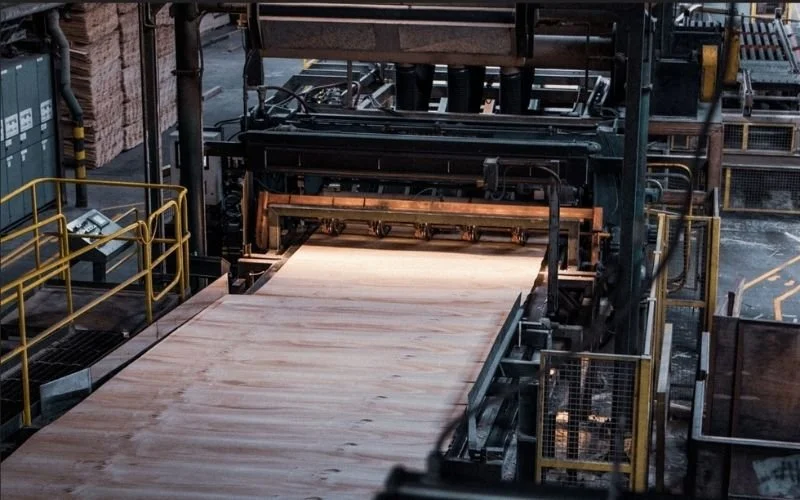
International Panel and Lumber (IPL), located south of Greymouth, has built a strong position in the West Coast processing sector. Originally constructed in 1965 to peel native logs, the business entered a new chapter in the early 1990s when it was purchased by a group of local investors with a clear focus on processing radiata logs from Timberlands West Coast. It is one of the largest employers in Greymouth, with almost 100 full-time staff.
In mid-1993, Glenn Moir received a call from Rob Lawrence, then CEO of IPL, about log supply. What began as a practical discussion about securing logs became the start of a partnership that has endured to this day. More than three decades later, IPL remains FM Group’s oldest domestic customer, with the majority of its log supply coming from FML and TFM.
Today, logs are sourced from the Nelson/Tasman region, the West Coast and Canterbury to supply this high-value market.
The supply chain is supported by careful transport planning, including backloading into Canterbury mills or Lyttelton Port to help keep freight costs competitive.
The IPL plant has changed substantially over the past 33 years. Major investment in peeling, sorting, drying and finishing has helped the business adapt and continue supporting a market that values consistent supply, efficient logistics and long-term relationships. IPL is a small-scale plywood producer, manufacturing a range of products from construction materials through to furniture applications. This product mix drives demand for both pruned and unpruned logs.
The relationship between FM Group and IPL is a reminder that durable partnerships are built on reliability, practical problem-solving and mutual commitment. From one phone call in 1993, the connection has grown into a long-standing domestic supply relationship that continues to support regional processing and value recovery from logs sourced across multiple regions.
As IPL continues to invest in its plant and capability, the partnership stands as an example of how strong regional businesses can work together over the long term. It is a story of local ownership, evolving processing capability and a supply relationship that has stood the test of time.
Tranz Alpine Scooter Safari
FML Riders Team Raises Over $11,000 for the Cancer Society
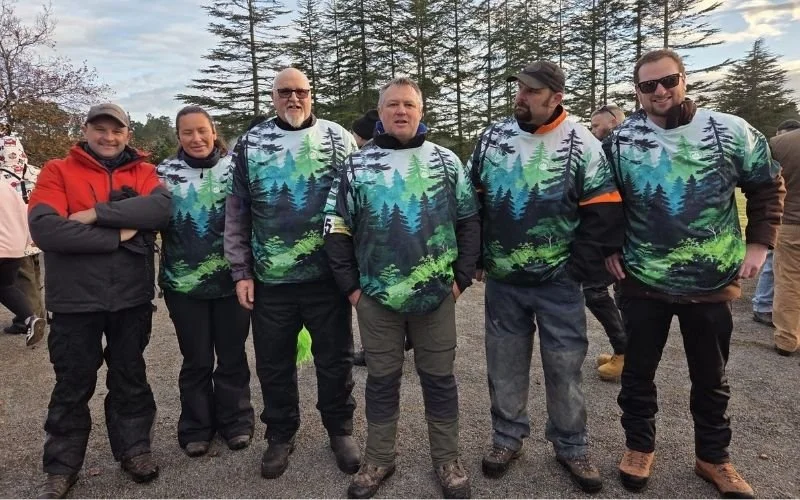
The FML Riders Team recently took part in the iconic “Trans Alpine Scooter Safari”, combining adventure, camaraderie, and community spirit to raise funds for the Cancer Society.
Team members Corban Lilley, Henry Morris, Dave Chandler, Richard and Dave Pearson tackled the event with plenty of enthusiasm and determination, with a fantastic support crew helping everything run smoothly along the way. Layka Chandler even helped DC out by taking on some of the tougher legs for him.
The day was filled with laughter, teamwork, stunning scenery, and plenty of memorable moments. Most importantly, the team raised an outstanding $11,284.00 for the Cancer Society. This fantastic contribution went towards the $375,311.00 raised on the day and will help support the valuable work the Cancer Society does for individuals and families affected by cancer.
The success of the event was a real credit to the riders, as well as the generous sponsors, supporters, friends, and family who got behind the fundraising effort. The support crew also played a big part in making the day enjoyable and successful for everyone involved.
The Trans Alpine Scooter Safari proved to be a rewarding experience, bringing people together for a great cause while creating lasting memories along the way. The team thoroughly enjoyed the challenge and the opportunity to make a positive difference in the community.
A sincere thank you goes to everyone who supported the FML Riders Team and helped achieve this fantastic fundraising result.
With such a successful event behind them, the team is already looking ahead and is excited about the prospect of taking part again in two years’ time. Until then, the FML Riders Team can be proud of an incredible achievement and the difference they have made for the Cancer Society.
Well done to Corban, Henry, Dave Chandler, Richard and Dave Pearson, and the entire support crew on a fantastic effort and an outstanding fundraising result of $11,284.00.
From the Backpage
Welcome and Goodbye!
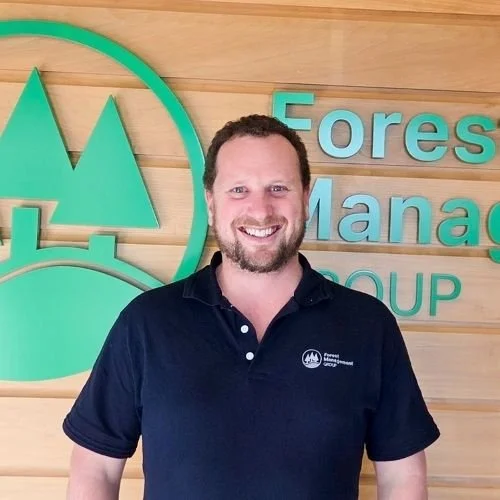
Forest Management Group is pleased to welcome Henry Morris as Business Development Manager. Henry brings strong forestry industry experience, with a background in client relationships, procurement, business development, and operational improvement.
Based with the Christchurch team, Henry will focus on systems improvement and new growth opportunities across harvesting, silviculture, planting, and forestry management services.
He will work closely with regional teams to connect market opportunities with FM Group’s operational expertise and support our future growth strategy.
We are excited to have Henry on board and look forward to the energy, expertise, and connections he brings to FM Group.

After 3½ years with FML, we said goodbye to Bridget on June 26, as she heads to an exciting new adventure in Perth.
Bridget will be greatly missed. Her positivity, humour, and trademark spunk brought plenty of laughs and energy to the office, leaving very big shoes to fill.
Outside of work, Bridget embraced a challenge, joining the FML team in several sporting events, including multiple Coast to Coast events, always with enthusiasm and determination.
We sent Bridget off in true style, with KFC in the lunchroom followed by jugs of beer at the Racecourse Hotel with friends and colleagues.
While we're sad to see her go, we're excited for what lies ahead and wish her every success. Thanks for everything, Bridget - you'll always be part of the FML whānau.
Previous issues

Autumn 2026 Newsletter
In this issue: Log Market Update, ETS Crabon Price Update, Introducing Ekos Forever Forests, Fuel Adjustment Dactors, FMG’s Tranz Alpine Scooter Safari and Welsome Aboard to Lawrence Weston, Hamish Thompson & Mike Scally!

Summer 2025/6 Newsletter
In this issue: Log Market Update, ETS Crabon Price Update, Resource Management Act Reform, New Northland Office Details, FMG Rides the Wilderness, Welcome to Matt Pedersen and a Goodbye to Dom Cleary!